Many applicants ask us: “I speak good Russian but hardly any German. Will I find work in Germany?” That depends on the job – and on whether you are ready to learn German. Here we show where Russian is a real advantage and where it does not work without German.
Where Russian really helps
International teams in logistics and production
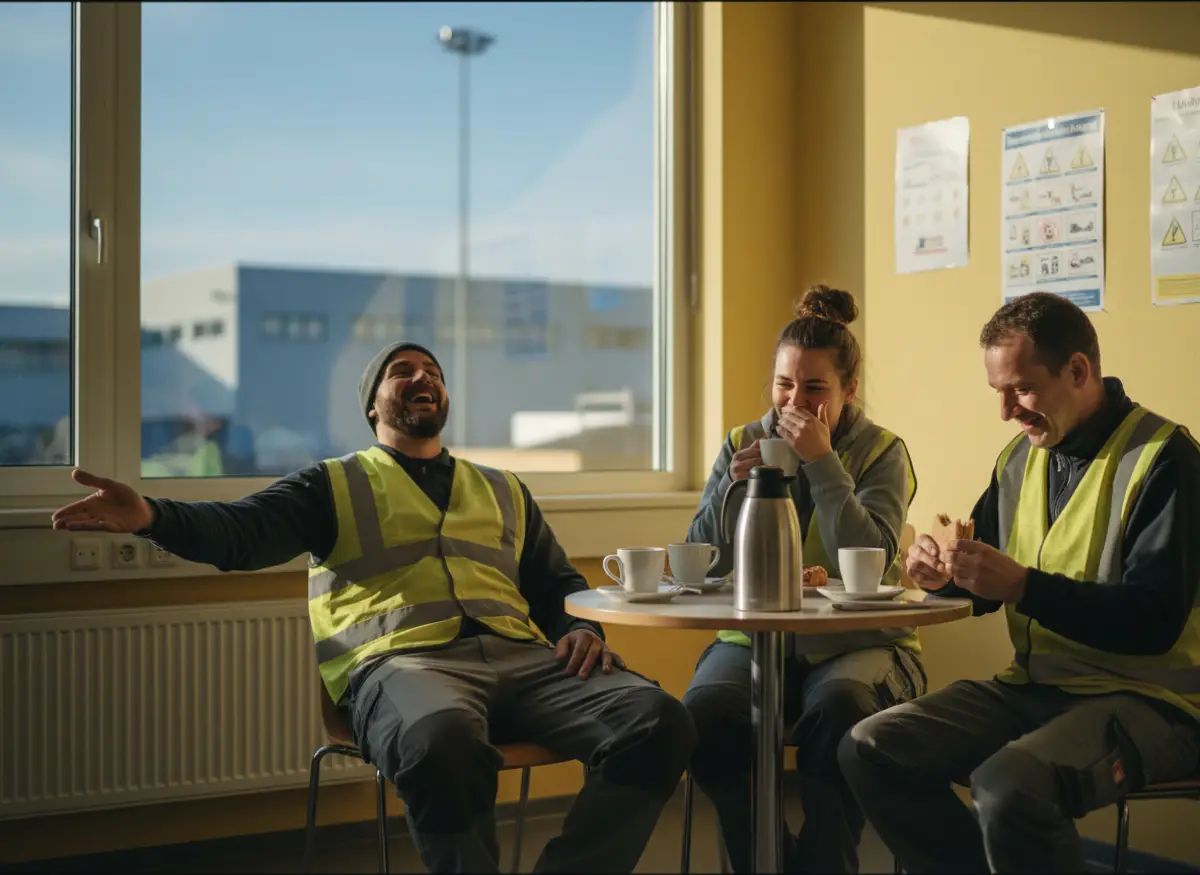
In warehouses and production halls, there are often people from Romania, Bulgaria, Poland, the Baltic states, Ukraine and the Republic of Moldova. Many of them understand Russian. This makes it easier to ask colleagues questions and get through the first working days – for example as a warehouse worker (m/f/d), production helper (m/f/d) or forklift driver (m/f/d).
Russian-speaking communities
Many Russian speakers live in Germany, including late repatriates (Spätaussiedler) and their families. In our regions there are larger communities, for example in Hannover and in Ostwestfalen-Lippe (OWL) around Paderborn – with Russian shops, Russian-speaking doctors, congregations and messenger groups. More about Paderborn and Hannover.
Support in Russian
We discuss the job interview and questions about the contract, moving and address registration (Anmeldung) with you in Russian – or in German or English if you prefer. This takes a lot of pressure off at the start.
Honestly: why German is still important
We do not promise that you “don’t need German”. Even in a Russian-speaking team, German is important:
- Safety at work: safety briefings, warning signs and instructions are often only in German.
- Supervisors: the foreman does not always speak Russian.
- Everyday life: authorities, bank, doctor, school, letters from the health insurance fund – almost everything is in German.
- Career: with German, more responsible tasks and further training are easier to reach.
The good news: you do not need a high level to start in a warehouse or in production. What matters is learning alongside your work.
Which level makes sense
- A1: greetings, numbers, the time, simple sentences – makes the first days much easier.
- A2: understanding simple instructions, explaining a problem, making a doctor’s appointment.
- B1: speaking more freely with supervisors and authorities.
For helper jobs, A1–A2 is a good goal. German is a plus, but we also consider applications without German.
Important words for warehouse and production
These words are worth learning even before your first working day:
- Achtung! / Vorsicht! – warning of danger
- Halt! / Stopp! – stop immediately
- Notausgang (emergency exit) and Erste Hilfe (first aid)
- Sicherheitsschuhe (safety shoes) – compulsory in many warehouses
- Palette (pallet), Gabelstapler (forklift), Lieferschein (delivery note)
- Pause (break) and Feierabend (end of the working day)
- “Ich verstehe nicht. Bitte langsam.” (“I don’t understand. Slowly, please.”) – the most important sentence at the start
Don’t be afraid to ask. Colleagues and supervisors in Germany are usually relaxed when new people are still learning German and are paying attention.
Russian as an advantage for your career
Russian does not only help at the start. In international teams, someone who speaks Russian and some German often becomes a bridge: they explain tasks to new people, help with safety briefings and pass questions on to supervisors. Such employees are in demand. “Russian plus basic German” is therefore a good strategy for the next few years.
Learning German cheaply or for free
- Adult education centre (Volkshochschule, VHS): almost every town has low-cost evening and weekend courses.
- Integration course: language and orientation in Germany. Who can take part depends on your status; EU citizens can be admitted in some cases. The Federal Office for Migration and Refugees (BAMF) or your local VHS can tell you more.
- Apps and online offers: free apps, online courses, videos and podcasts with slow German.
- Practice: use German every day – in the shop, with colleagues, with neighbours. Write down new words from work.
Step by step: work and learn at the same time
- Assess your German honestly in your application.
- Learn basic words before you travel: greetings, numbers, “Achtung”, “Stopp”, “Hilfe” (help).
- Choose a job in a warehouse or in production.
- Sign up for a VHS course in your first months.
- Speak German every day, even when there are Russian-speaking colleagues around.
How we support you
We offer work in warehouses, in production and as a forklift driver in Göttingen, Hannover and Paderborn – from €15.33 per hour gross, free of charge for applicants. We help with moving and address registration, and accommodation can be provided on request. More under How it works.
Fill in the application form or ask in the chat on the website – in German, English or Russian.